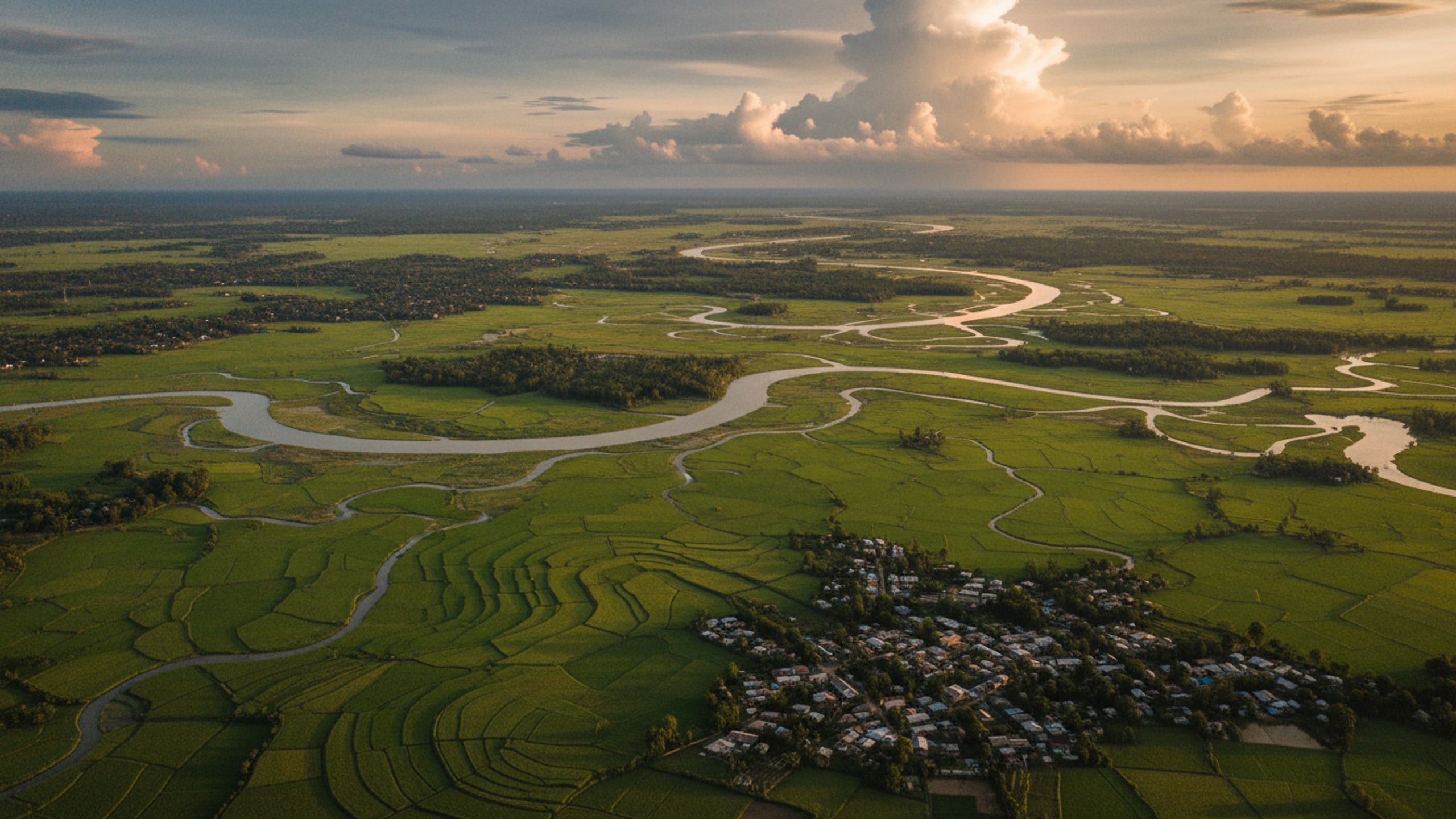
Why Bangladesh,
and what it costs
A manufacturing and infrastructure economy built inside a single generation.
Bangladesh has moved from a low-income agrarian base to a substantial exporting economy with a domestic consumer market of real scale. The growth has been unusually broad: ready-made garments built the export account, remittances built household balance sheets, and public investment in power, roads and crossings has begun to remove the constraints that held the rest of the economy back.
None of that makes the market easy. Growth of this kind creates demand faster than it creates institutional capacity to serve it. The result is a market with genuine, financeable projects and an approvals architecture that was not designed for the volume or complexity now moving through it.
This page sets out the case and the constraints together. We treat that as a professional obligation rather than a disclosure. An investor who has priced the difficulty correctly is a better counterparty than one who has been persuaded it does not exist.
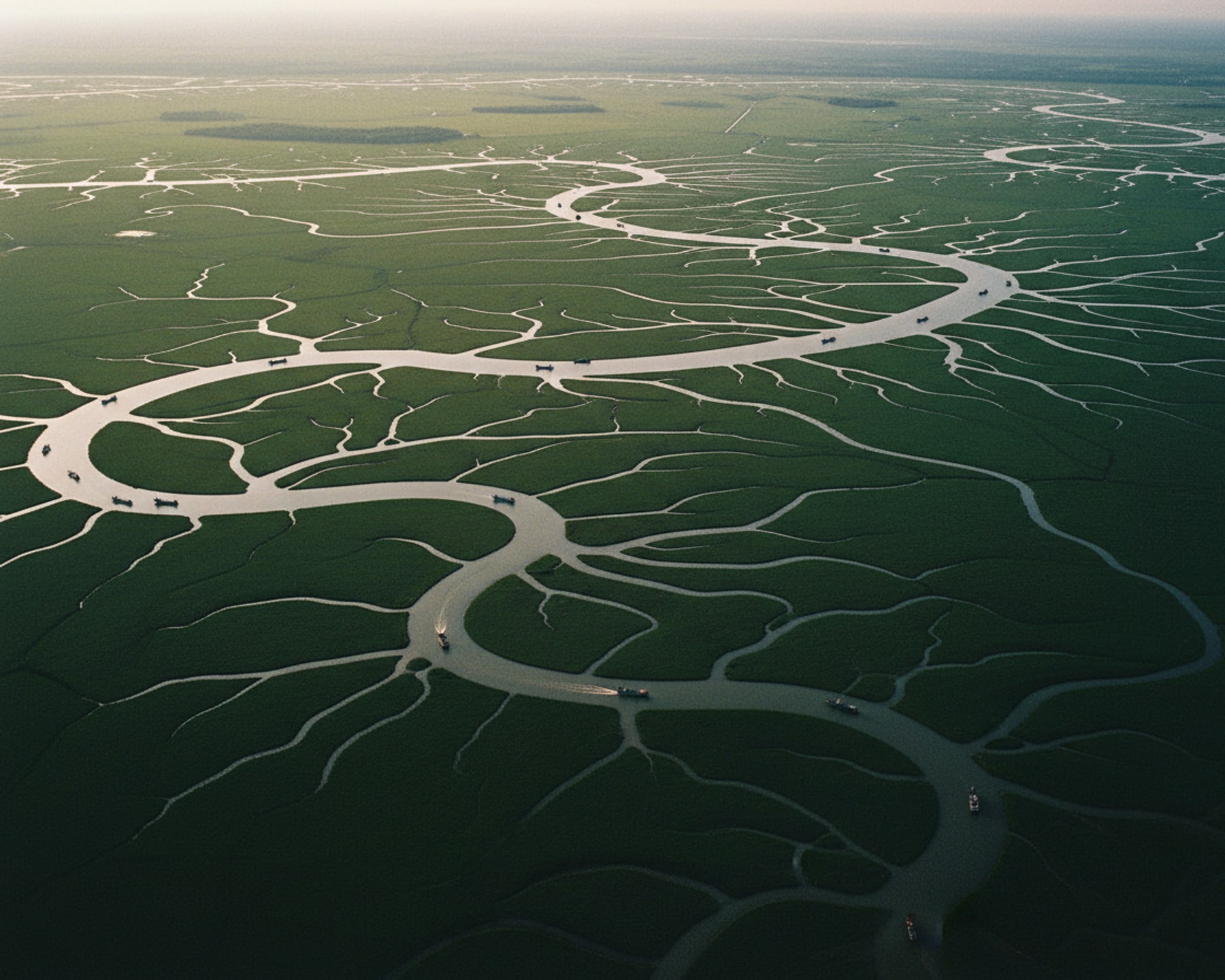
Demand is domestic as well as external.
The export narrative is well understood. The domestic one is consistently underweighted. A large population with rising household income has produced sustained demand for power, housing, financial services, packaged goods, healthcare and mobility — demand that is not contingent on any single export market holding up.
That matters for how projects are underwritten. An investor exposed only to the garment supply chain is exposed to a narrow set of buyers and a narrow set of tariff outcomes. An investor in generation, logistics, digital infrastructure or urban systems is underwriting internal demand, which has been the steadier of the two.
Remittance inflows sit underneath both. They support consumption, they support the external account, and they have made household formation and small enterprise possible in districts far from the industrial corridors.
Graduation is a promotion that removes a subsidy.
Least-developed country status carries preferential access to several major markets — most consequentially duty-free, quota-free entry into the European Union under the Everything but Arms arrangement, with rules of origin that are deliberately permissive. Graduation removes that entitlement. Transition arrangements extend it for a period rather than ending it overnight, but the direction is settled.
What replaces it is conditional. Continued preferential access under a successor scheme depends on ratifying and effectively implementing a schedule of international conventions covering labour, human rights, environment and governance, and on meeting stricter rules of origin that require more of the value to be added domestically.
For an investor, the second condition is the interesting one. A stricter origin rule is an argument for building upstream capacity inside Bangladesh — spinning, weaving, dyeing, components, packaging — rather than importing intermediate goods and assembling. Preference erosion is, in that narrow sense, an industrial policy the country did not have to write.
It also raises the cost of doing nothing. Competitiveness that was previously delivered by tariff treatment now has to be delivered by productivity: reliable power, shorter port dwell times, lower inland logistics cost, better skills. Those are precisely the sectors in which capital is being sought.

The programme has moved from announcement to asset.
The multipurpose bridge across the Padma, the first metro lines in Dhaka, the tunnel under the Karnaphuli and the deep-sea port works at Matarbari have changed what is physically possible. Journey times that shaped industrial location decisions for decades have been rewritten, and the southern and western districts are inside the economic map in a way they were not before.
The energy position is more mixed. Installed generation capacity has expanded quickly, but transmission, distribution and primary fuel supply have not kept pace, and imported fuel exposes the system to price and currency movement. The national ambition for clean generation by 2041 is therefore as much a grid and land question as a technology question.
That is where the investable positions sit: evacuation infrastructure, storage, distribution loss reduction, industrial efficiency and generation on sites that can actually be assembled and connected.
A young labour force, and a services export story that is no longer marginal.
Demographics and workforce
Bangladesh has a young population and a working-age cohort that continues to grow. Female participation in the industrial workforce is high by regional standards and was a precondition for the garment sector’s scale. Labour cost remains competitive, and labour supply is not the binding constraint on most projects.
The constraint is skills depth in the middle. Line operators are available; qualified supervisors, maintenance engineers, certified technicians and process specialists are harder to recruit and easier to lose. Projects that budget for training and certification from the outset consistently ramp faster than those that assume the market will supply them.
ICT and services exports
Software development, business process outsourcing, digital services and freelance technical work have built a genuine export position, supported by successive national digital agendas and by a large volume of graduates entering technical fields each year.
It is a strategically useful export because it is not tariff-exposed. Preference erosion does not touch it. What it needs instead is connectivity, power reliability, data centre capacity, a workable framework for cross-border payment and data transfer, and enough enterprise-grade delivery capability to move up from cost arbitrage. Each of those is an investable gap.
What actually stops projects.
Who decides what.
Listed for orientation only. Fratres Limited does not claim any relationship with, endorsement by, or mandate from any of these institutions.
The market rewards preparation more than it rewards speed.
Our experience is that the projects which complete are rarely the ones with the most capital behind them. They are the ones where the approvals sequence was mapped before commitment, where the local counterparty was diligenced properly rather than introduced socially, where the land position was verified rather than represented, and where the foreign exchange trail was set up correctly on the way in.
That work is unglamorous and it is front-loaded. It is also the difference between an eighteen-month path and a four-year one. Our engagement model is built around doing it in the right order, and our sector pages set out where we believe the strongest positions currently are.
Test the case against your own mandate
If you are assessing Bangladesh for a specific sector, structure or timeline, we will give you a direct reading of what would have to be true — including where we think the case is weakest.
Make an enquiry