Skip to content
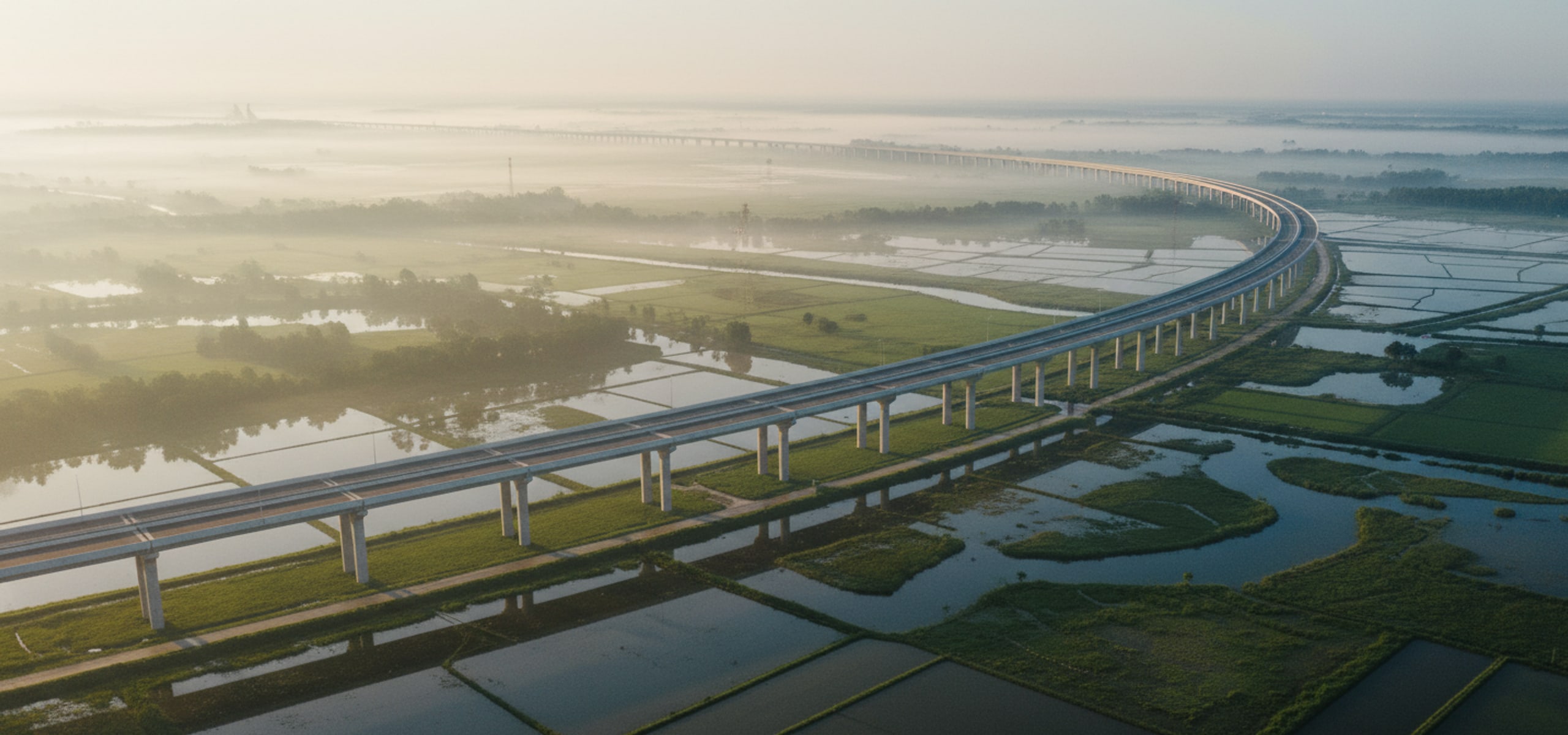
Long elevated expressway curving through green delta landscape at first light

Transport Infrastructure & Logistics

Highway and expressway concessions, rail modernisation, inland container depots, cold chain and multimodal freight corridors linking production to port.

Road, rail, inland waterway and freight.

Logistics cost as a share of delivered value is high in Bangladesh, and the reason is not distance. The country is compact. The reason is that goods move slowly. A container leaving a factory in Gazipur or Narayanganj for Chattogram travels a corridor congested at both ends and constrained in the middle, and the delay is paid for in working capital rather than in freight rates.

The Padma Bridge closed a structural gap in the southwest and reoriented the national road network. The Dhaka–Chattogram corridor remains the economic spine and carries a disproportionate share of freight. Rail is in a long modernisation programme — gauge conversion, new links and rolling stock — with the ambition of a network that can compete with road on the primary corridor rather than merely supplement it.

Inland waterways are the underused asset. Bangladesh has a very large navigable network and river transport remains the cheapest mode by a wide margin, but it has lost share to road because terminal handling, dredging and reliability have not kept pace. Inland container depots, cold chain and multimodal handling are thin relative to what a manufacturing economy of this size requires.


Economic spineDhaka–Chattogram corridor
Regional alignmentsAsian Highway · Trans-Asian Railway
Highway network ownerRoads and Highways Department
Inland waterway authorityBIWTA
Cheapest available modeInland water transport
Principal programme riskCorridor land acquisition

Structural and institutional reference points. Figures are stated only where they are matters of public record.


What is available, what stands in the way, and what we do about it.

  • The Dhaka–Chattogram corridor carries a disproportionate share of national freight and is the highest-return target for expressway, rail and inland depot investment.
  • Inland container depots and off-dock facilities relieve port congestion and are proven, contractible assets with a clear revenue line.
  • Inland waterway freight is structurally the cheapest mode. Terminal, dredging and vessel investment can recover share that has drifted to road.
  • Cold chain capacity is materially under-built relative to agricultural output and to pharmaceutical manufacturing capability.
  • Regional connectivity — the Asian Highway and Trans-Asian Railway alignments, and transit and transhipment arrangements with neighbouring states — creates corridor value beyond domestic demand.
  • Land acquisition along linear corridors is the single largest source of programme delay and cost escalation, and it is a statutory process rather than a negotiable one.
  • Modal integration is weak. Road, rail, river and port operate on different documentation, different timetables and different institutional logic.
  • Rail capacity and gauge inconsistency limit what can realistically shift from road in the near term, irrespective of demand.
  • Tolling and user-charge acceptance is politically sensitive, which shapes what revenue model is available to a road concession.
  • Freight movement is exposed to seasonal flooding and to disruption events that concession risk allocation must address explicitly rather than by exception.
  • Corridor-level assessment: establishing where the constraint actually binds, and whether the intervention that relieves it is road, rail, river or terminal.
  • Structuring concessions and availability-based contracts through the partnership framework where a user-charge model will not stand alone.
  • Managing land, resettlement and utility diversion as a critical path workstream rather than a downstream consequence of design.
  • Assembling the counterparty set across the road authority, the railway, the waterway authority and the port so that modal interfaces are contracted rather than assumed.
  • Positioning projects for development finance, which remains the deepest source of long-tenor capital for transport in this market.

The bodies whose mandates a project in this sector will touch. Understanding what each one is responsible for — and what it is not — is the first piece of work on any engagement.
Roads and Highways Department
Owns, builds and maintains the national, regional and district highway network.
Bangladesh Bridge Authority
Implementing authority for major bridge, tunnel and expressway assets.
Bangladesh Railway
The state railway operator and asset owner, and the counterparty for modernisation and freight arrangements.
Bangladesh Inland Water Transport Authority (BIWTA)
Regulates and maintains the inland navigable network, its terminals and the national dredging programme.
Ministry of Road Transport and Bridges
Carries policy and approval responsibility for the road and bridge sector.
Land Port Authority of Bangladesh
Operates the designated land ports handling overland trade with neighbouring states.

These institutions are named because they are the relevant public bodies in this sector. Fratres claims no relationship with, endorsement by, or mandate from any of them.
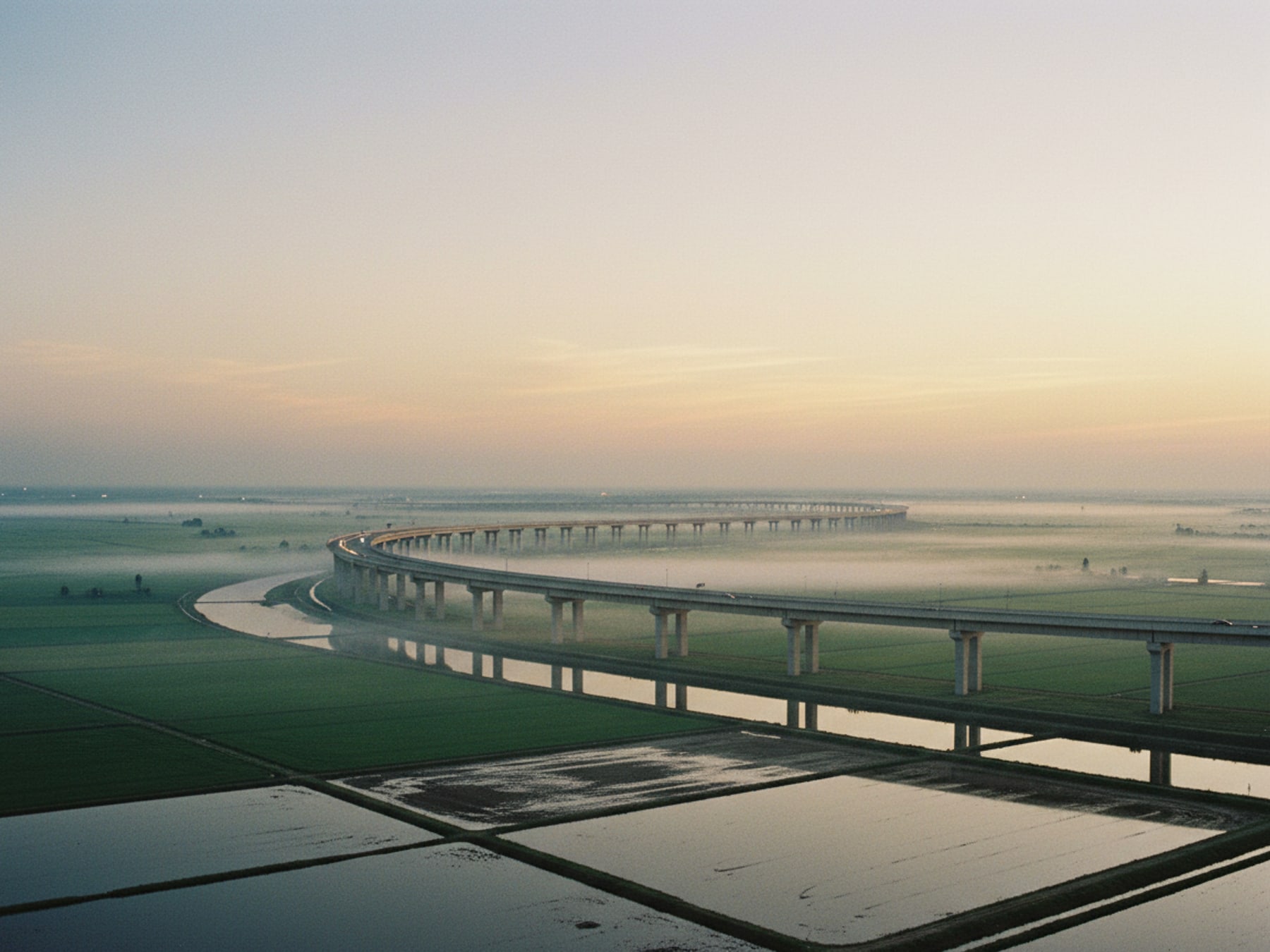
Long elevated expressway curving through green delta landscape at first light

Bangladesh is compact. Its freight is slow.

The distance from the industrial belt north of Dhaka to the quay at Chattogram is short by any regional standard. The transit time is not. That gap between geography and performance is where logistics cost is created, and it is not fixed by adding lanes at one end.

We look at corridors rather than assets. Where the constraint is a junction, an inland depot or a customs process, building an expressway simply relocates the queue. The intervention has to be chosen against where the delay actually accumulates.

Our approach

Transport Infrastructure & Logistics: begin a conversation.

The most useful first conversation is a specific one — the asset, the counterparty, or the approval that has stalled. Enquiries are reviewed by the partnership and answered directly.

Make an enquiry